 Curated lighting, delivered to your door.
How to choose a chandelier that feels intentional, not oversized.
The best chandelier is not always the biggest one. Start with the room, then choose a fixture that has the right diameter, drop, brightness, and visual weight for the way the space is actually used.
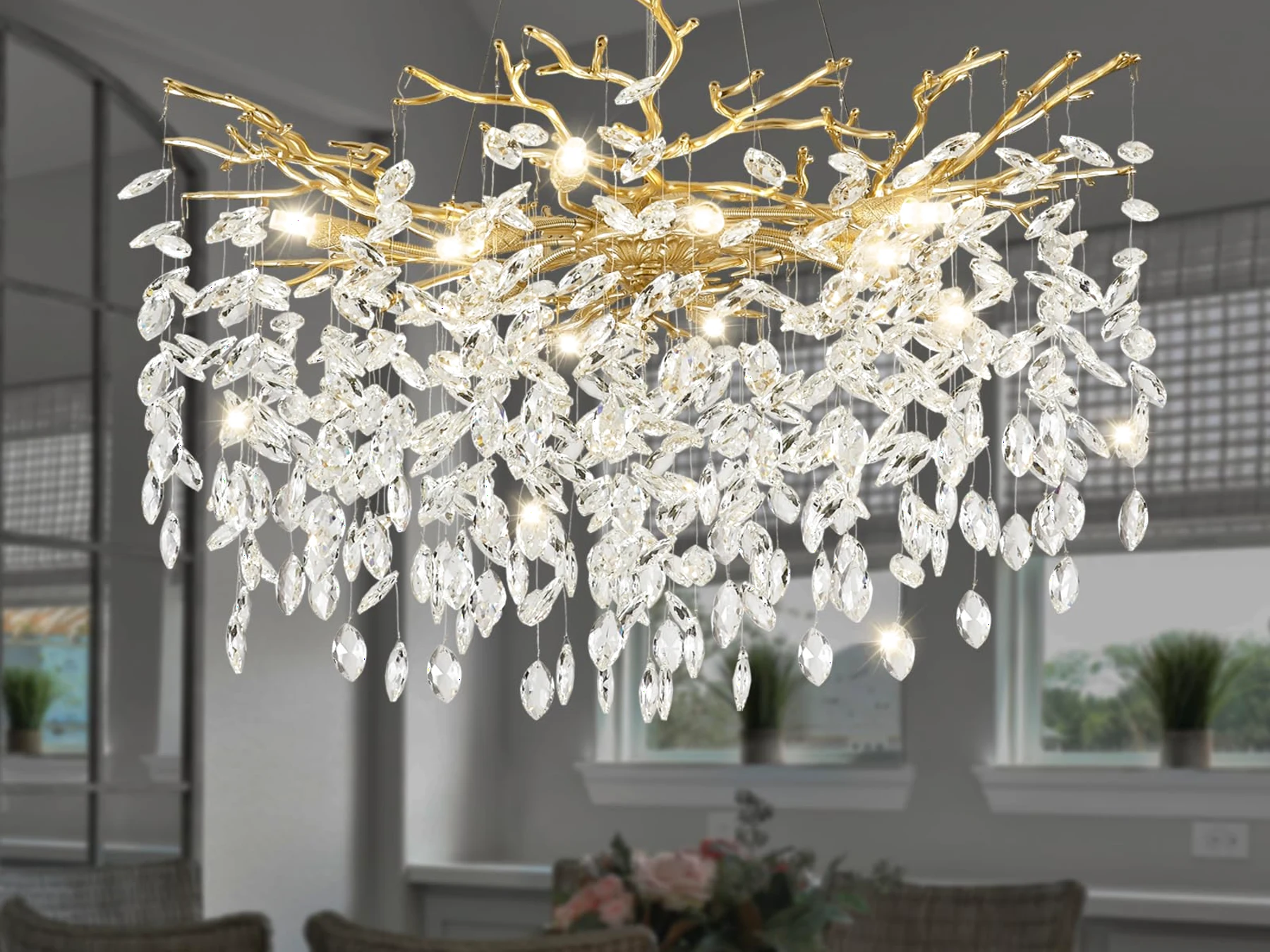
Start with the surface, not the ceiling.
For dining rooms, size the chandelier to the table first. A useful starting point is a fixture that lands around one-half to two-thirds the width of the table, leaving enough negative space around the edges so the fixture feels composed rather than crowded.
In living rooms and open-plan spaces, use the seating area as the anchor. The chandelier should relate to the furniture grouping below it, not simply the total square footage of the room.
Watch visual weight.
A smoke-glass globe, crystal branch, or multi-arm chandelier can read much larger than its measured diameter. Transparent materials feel lighter; dense metal frames, opaque shades, and high-contrast finishes feel heavier.
If the room already has strong architectural lines, choose a quieter silhouette. If the room is minimal, a sculptural fixture can carry more of the composition.
Drop height changes everything.
Over a dining table, keep the fixture low enough to create intimacy but high enough to preserve sightlines. In circulation areas, prioritize clearance first. A beautiful fixture that interrupts movement will always feel wrong in daily use.
When in doubt, mock the lowest point with painter's tape or string before ordering. It is a quick test that prevents expensive scale mistakes.